Psychosocial Impact of COVID-19 Pandemic

Admin IIBPAnveshan, Issue 1, Volume 1

  COVID-19 pandemic, though is biological in nature, has already left a long trail of social issues which in turn has let to lot of psychological problems. To begin with, in the absence of medical vaccine so far, we are left with no other choice than the social vaccine – Home Quarantine, Lockdowns and Social Distancing. The social measures taken …

Dealing with Change: Adapting to the New Normal at Work

Admin IIBPAnveshan, Issue 1, Volume 1

  Change can be simply defined as a transition or an alteration. As our planet weathers the COVID-19 pandemic- jobs, organizations and workforce have been pushed into uncharted territories. A sudden switch to remote modes of working, changes in work environment and lifestyle are proving to be testing times for organizations. Observing change, or witnessing things unfolding passively is different …

Colorful social media and tech app icons floating over a blurred smartphone screen.

The Minacious Trap of Seeking Excessive Social Approval

Dr. Farah NaqviGeneral Psychology

Do you find yourself pleasing others sometimes at the cost of your own personal preferences and happiness? Do you feel utterly dejected when faced with criticism? Do you find buying yourself gadgets and products not because they cater to your senses but because they are in trend? Do you engage in endorsing religious or moral content in virtual space, not ...

Self Talk

Admin IIBPGeneral Psychology, Mental Health

How do you talk to yourself? By that, I don’t mean talking out-loud while walking down the street, or sitting alone, I mean, what is the tone of your inner dialogue: the conversations we have with ourselves in the privacy of our own mind? The words we use to speak to ourselves can have a huge impact on us. If ...
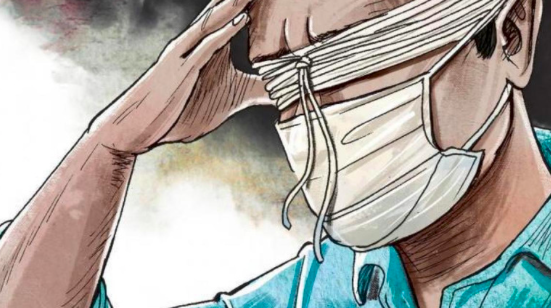
Illustration of a person in a face mask with hand on forehead, appearing stressed or anxious

Coping with Stress During COVID-19

Team IIBPAnveshan, Issue 1, Volume 1

  The ongoing pandemic has resulted in increased concern about the mental health of the people. Fear and Anxiety related to contacting the new disease has instilled overwhelming and strong emotions. Different people react to stressful situations differently. People who suffer from anxiety disorder are more likely to experience an increase in anxiety during such times. Added stress such as …

Mental Health During COVID-19: The HR Mantle

Team IIBPAnveshan, Issue 1, Volume 1

  COVID-19 pandemic has confined millions of people across the globe to their homes and has posed a very strange situation for workplaces. In these tumultuous times, when normal life has been disrupted, the internet, as always, has come to our rescue. A recent article published by Google titled “What is India Searching for? Insights for Brands” analyses the most …

A small green sprout growing through cracked earth with bright sunlight filtering through blurred green foliage behind

Optimism Bias (Unrealistic Optimism & the Illusion Of Invulnerability)

Himaja BoinapalliGeneral Psychology

Optimism   Optimism can be one’s biggest strength. It acts as a self-fulfilling prophecy, helps us take risks, learn more & succeed, reduces stress & anxiety, elevates our mood and happiness, reduces the risk of coronary heart disease/death & thus improves health and wellbeing, just to name a few benefits.  ("The Optimism Bias: Imagining A Positive Future", n.d.) Optimism has ...

Participation in Workplace Democracy and its Implications on Authoritarianism

Manav AgarwalUncategorized

Psychologists have always viewed authoritarianism as a rather rigid personality trait that is not susceptible to short term change. Authoritarianism refers to the “tendency to be deferent to authority and to be intolerant of deviance from existing social hierarchies” (Wu & Paluck, 2020, p. 2). The studies conducted by Wu & Paluck (2020) provide contrasting evidence to the idea of ...

Neuro-psychology Of Complaining & What We Can Do

Himaja BoinapalliGeneral Psychology

According to the Cambridge dictionary, complaining is the act of saying that something is wrong or not satisfactory. An average person complains 30 times a day. (Will Bowen, leading author & speaker on the topic, founder of ComplaintFreeWorld) We can complain to start/ end a conversation, we complain when we feel powerless, frustrated, complain out of habit, to avoid responsibility, ...