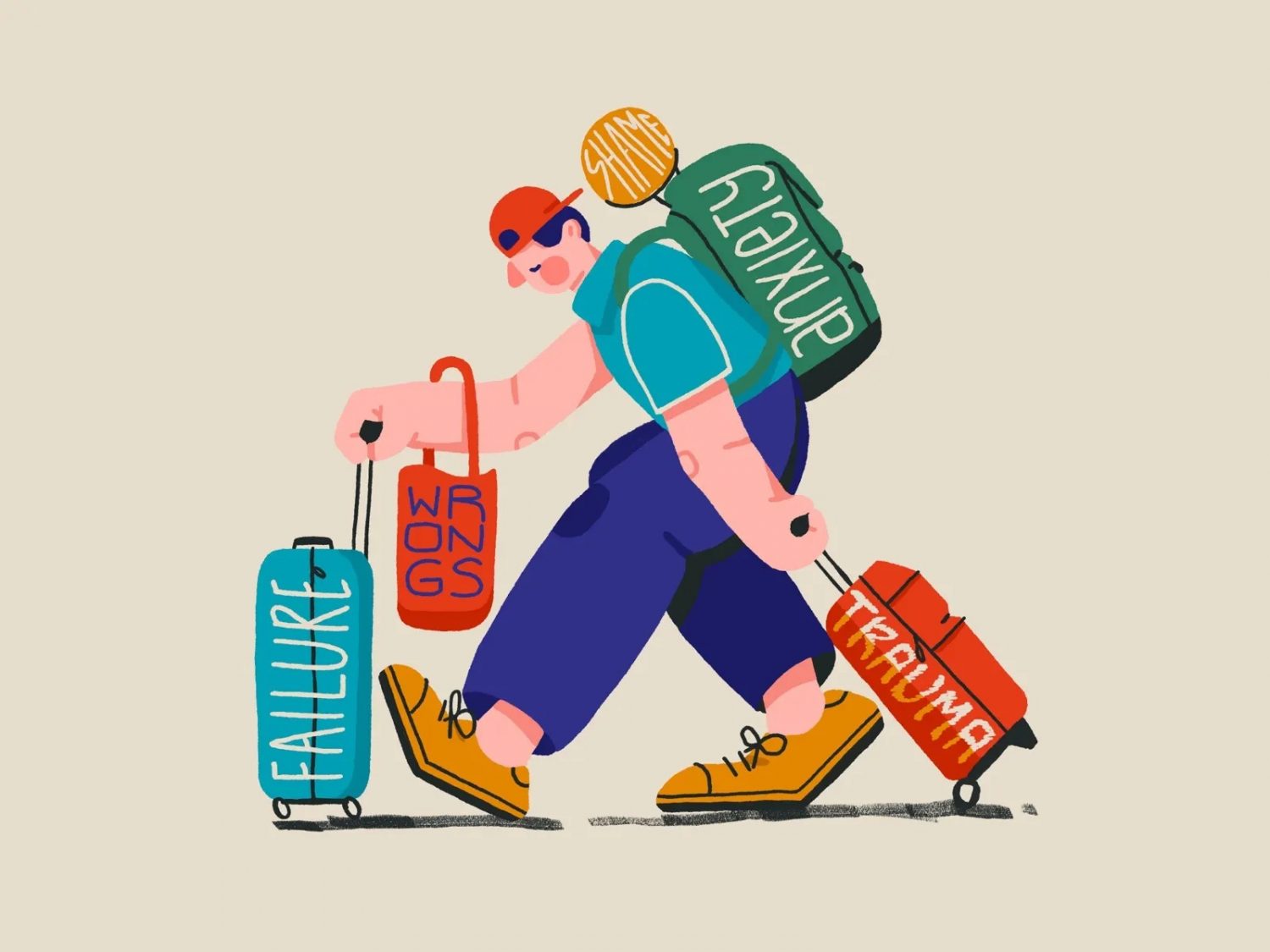
The famous Japanese author, Haruki Murakami, wrote ”Pain is inevitable. Suffering is optional.” The difference between the two is monumental. While we all experience pain, suffering is what happens when we hold on to the painful experience much longer than necessary. This creates emotional baggage, which we find ourselves unable to let go of.
Of course, no one chooses to suffer intentionally. We are all waiting for someone else to save us so that it will stop – in other words, for closure. This can be in the form of apologies, validation, answers, or just for the circumstances to change altogether. But truth be told, for many of us, these never happen. And so we continue to live with the emotional baggage, often unaware of how it is impacting other areas of our life. In therapy, we speak of closure with paramount importance. It can be one of the most freeing experiences of our life. Psychologically, closure comes from within, not always from the outside world.
So why is it so hard to move on when something painful happens to us?
Our brain was never wired to understand incomplete events. We all thrive on predictability. So when something ends abruptly – be it relationships, friendships, or opportunities – it leaves a mark. Closure is all about closing that loop – sometimes with answers, but more importantly, with acceptance.
One of the ways to do this is by looking at what are the thoughts associated with the painful experience. Most often, we end up feeling stuck because we haven’t received an answer to our questions such as “why did this happen to me?” , “what could I have done differently?”. But rarely do we get the answers to these. The mind ends up filling in the blanks on its own, often with self blame and worst case scenarios.
Closure is not a moment, nor is it something dramatic like you see in the movies. It is a process, whereby you slowly create it for yourself. You will have to acknowledge the pain, allow the emotions to pass by instead of resisting them, and complete the unfinished story that is still bothering you. You will have to ask yourself what exactly it is that you are holding on to. You have to ask yourself what exactly is the real loss. On the surface level, it may be a person. But when you introspect further, you will realise you are holding on to so much more – maybe an imagined future, or feeling valued or chosen etc.
It involves you accepting a lot of hard truths. It involves you accepting what happened, what did
not happen, and what won’t ever happen. In therapy, we also talk about the power of creating a closure ritual to aid this process. This can be in the form of writing a letter you will never send, throwing away anything that reminds you of the person/event etc. This can signal to your brain that the chapter is ending.
As important as it is to engage in these processes, it’s equally important to understand how emotional baggage can leave a scar physiologically. The body indeed keeps the score. Unresolved trauma or stress shows up in different ways in our bodies, which is why it is also essential to regulate your nervous system through meditation, mindfulness, breath work, and grounding exercises. A regulated body will help heal a heavy mind.
Unless we deal with our past emotional baggage, it will always seep into our present. It’s almost like setting a boundary with your past – a compassionate act you do for yourself, because you no longer deserve to be tied down by it.
About the Author