What Never Changes in a Changing Organization
If someone asked me to describe the last two decades of my career in one word, it would be “CHANGE”
Economic reforms, Globalization, Outsourcing, The financial crisis, Digital transformation., Technology disruption, The rise of agile organizations, COVID-19, Hybrid work and now Artificial Intelligence.
Every few years, a new wave arrived, promising to redefine how organizations would compete and how people would work, some transformations reshaped industries, others quietly disappeared into management history. Yet after watching organizations navigate these very different journeys, I’ve become convinced that the most interesting story was never the transformation itself. It was the people living through it.
I’ve often heard leaders say, “The only constant is change.” after twenty years as an HR Business Partner, I would add another observation.
The only constant in organizational transformation is human behaviour.
The technology changes, strategies changes, organization charts changes, business models evolve, leadership teams come and go, but people continue to ask remarkably similar questions.
“Will I still be relevant?”
“Will I succeed in this new world?”
“Can I trust the people asking me to change?”
Those questions haven’t changed since my first year in HR, neither has the emotional journey behind them. One pattern has become especially clear, organizations rarely struggle because change is difficult, they struggle because change disrupts certainty.
In successful organizations, this becomes even more pronounced, success creates routines, routines become habits, habits become culture, eventually, culture becomes a well-oiled status quo—efficient, familiar, and comfortable. Ironically, the very systems that once enabled success often become the hardest to question.
I’ve seen organizations invest millions in technology while underestimating the emotional investment employees have in the way work has always been done. It is tempting to label this as resistance. I see it otherwise, resistance is often a rational response to psychological uncertainty.
People are rarely asking, “Why should the organization change?” instead they are asking, “What does this change mean for me?”
That distinction matters, it shifts the leadership challenge from implementing transformation to creating confidence. Over the years, I’ve also noticed another recurring pattern, every transformation programme has detailed plans for technology. operational excellence, governance, financial outcomes, risk management, yet one workstream is frequently underdeveloped – “Preserving Trust”, Trust is rarely discussed in steering committee meetings, yet it quietly determines whether employees interpret change as an opportunity or as a threat.
Perhaps this is where the role of an HR Business Partner has evolved the most, the smartest HR Business Partners never simply facilitators of chang, they became interpreters between business ambition and human experience, they help leaders understand the emotional consequences of strategic decisions. Equally, they helped employees understand the purpose behind those decisions.
Their work wasn’t about reducing resistance, it was about increasing understanding, Looking back, I don’t believe organizations succeed because they become exceptionally good at managing change, they succeed because they remember what should never change.
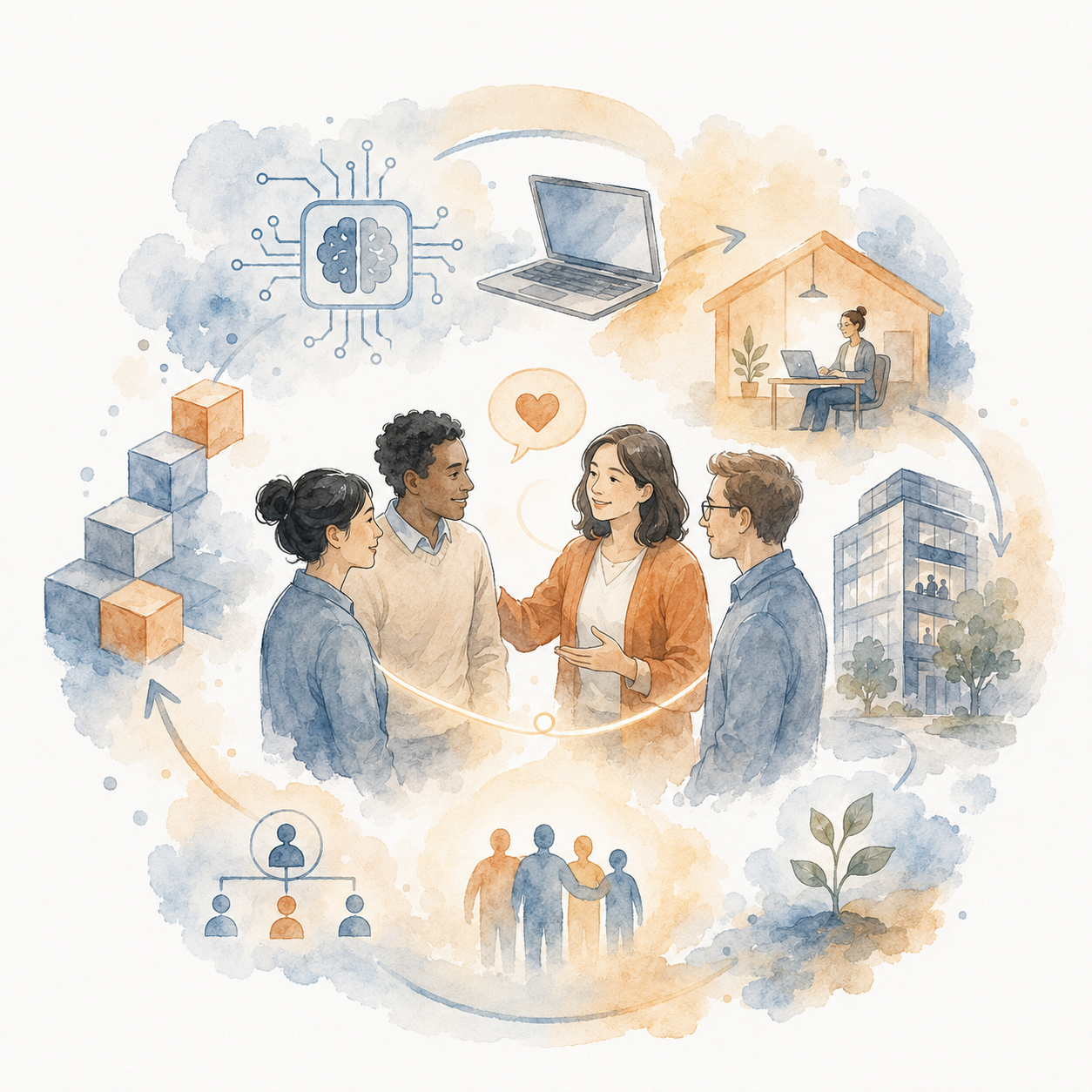
Respect, Trust, Purpose woven through meaningful conversations.
The dignity with which people are treated, these are not “soft” values, they are enduring organizational capabilities. Technology will continue to evolve, business models will continue to evolve, AI will almost certainly reshape work in ways we cannot yet predict. Human beings, however, are likely to continue asking the same questions they have always asked.
Do I belong? —– Do I matter? —– Can I trust the future we’re creating together?
Perhaps the real challenge of business transformation has never been changing organizations, it has always been understanding people.