When we talk about careers today, we can see a sharp rise in choices. From doctors, engineers, and academics, we are moving into a zone of multiple career choices. Who imagined content creation, social media management, the gig economy, graphic designing, or AI ethics as serious career paths?
Previous waves of technology, like email or automated voice menus, also made workers worry about jobs. But those changes did not fully replace us, instead they became part of work. Yet with every technological shift, the fear of replacement grows stronger. Careers are increasing, but so is instability.
Even today, for many people government jobs represent stability and security, but cracking unpredictable exams is not for everyone. Corporate jobs and MNC culture promised another route, yet layoffs across large companies show that uncertainty exists there too, affecting workplace balance and emotional safety.
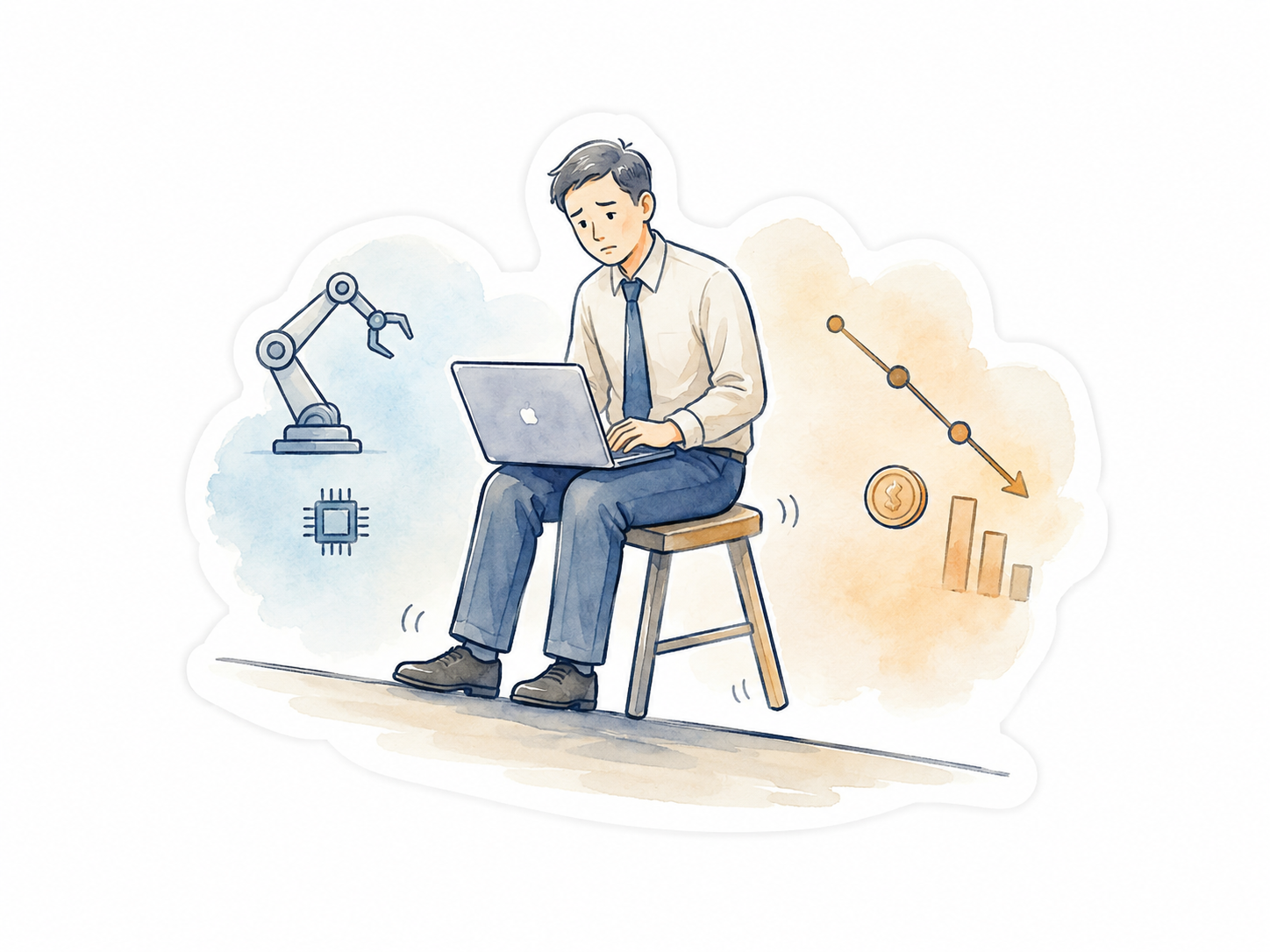
Now, we have artificial intelligence. Many of us use AI to complete assignments, projects and deadlines. Today, when half of us feel handicapped without it, career fear naturally increases. But this fear does not arise only because of AI, it comes from a deeper fear of being replaced. When a colleague performs better or gets closer to an appraisal, we may feel the same insecurity. In this sense, AI becomes another employee in the room.
Recently there is also an assumption that AI may create instability for mental health professionals. But years of practice, patience, degrees, observation, and human interaction cannot be replaced so easily. AI can use jargon, and reply but can it really respond to emotional needs? Can it understand behaviour in depth? Can it sell fruits on hot streets? No.
When career instability disrupts work-life balance and affects well-being and engagement, it creates a loss of control. When people feel their career trajectory is shaped by invisible systems and shifting technologies, they may believe that no matter how hard they work, they still might be replaced. This is where attitude change and learned helplessness begin to fracture an individual’s psychological ground.
The Hidden Ruptures of Modern Work
We are living through a quiet mental health crisis that rarely gets named: the grief of the “almost career”. Not unemployment. Not failure. But almost becoming something.
People today clear interviews but do not get selected, go viral but cannot sustain income, freelance but lack identity, switch fields before mastery, or collect internships instead of stability. This creates a unique grief: mourning a future that looked possible but never fully happened. It can lead to identity suspension, ambiguous loss, chronic disappointment, fatigue, identity diffusion, learned helplessness, and emotional numbness.
This cycle eats away at agency: insecurity breeds withdrawal, survival scanning, and eventually turnover. For many Gen Z adults, careers are tied to validation, identity, worth, belonging, and proof of intelligence. When careers become emotional attachment figures, instability hits harder. Professional success becomes proof of worthiness, and unstable work begins to affect relationship security, self-confidence, and emotional connection.
This creates high-functioning uncertainty. Not everyone who is struggling looks unstable. Some people are busy networking, building portfolios, taking courses, and posting productivity content, but internally they feel directionless, financially unsafe, replaceable, and exhausted. This is functional anxiety: continuing to perform while mentally deteriorating.
The pressure also feeds performative professionalism and identity branding culture. Professional platforms often push people towards fake certainty, toxic productivity, “founder” culture, and achievement theatre. The consequences include comparison anxiety, imposter feelings, shame during career gaps, and the inability to rest without guilt. Slowly, personal identity becomes a commercial brand.
This relentless cycle tends to act like an attachment issue which replaces the sense of emotional security with professional validation. This can even fracture our intimate relationships and romantic confidence. When passion turns into financial survival, and if we turn hobbies into monetized brands; it takes away our basic joy, letting capitalism enter our emotional identity and distorting the whole concept of it. It delays our transition into adulthood, trapping us in an inevitably dark circle of identity suspension. We aren’t built to reinvent ourselves every six months. Even if we perform through anxiety, we are left mourning a future that felt entirely possible but never fully arrived.
This trauma of constant reinvention is deeply connected to Gen Z work life. Earlier generations often had more linear careers. Today, people reinvent themselves every few months through new skills, AI adaptation, personal branding, side hustles, and industry shifts. Humans were not psychologically designed to rebuild themselves at this pace.
The Path to Genuine Retention
This is where organizational design and employee retention either stand strong or break down. Employees today are not only afraid of losing jobs, they are afraid of losing control over their future. As AI changes industries, many feel trapped in uncertainty, where skills may become outdated quickly and career paths no longer feel predictable.
Instead of feeling connected to work, employees may psychologically withdraw. Some disengage through quiet quitting, while others try to become “irreplaceable” by withholding knowledge. Many enter survival scanning, where attention shifts from the current workplace to job alerts, networking, upskilling, and safer opportunities. In such environments, retention collapses because fear replaces psychological safety.
To turn this around, transparent leadership communication is essential. It reduced survival scanning by removing the mystery behind organizational changes. Leadership directly affects retention: a bossy, micromanaging manager magnifies insecurity, while a supportive supervisor provides stability. Structured mentoring and career guidance can help employees regain direction and control.
AI could still prove useful if handled with care. It can free human workers from repetitive tasks and create more space for creative, strategic, and meaningful work. But industries must also define where the machine ends and the human begins. AI assistants can assist, but governance, strategy, emotional intelligence, and ethical decision-making must remain with people. This role clarity protects meaningful human work.
Retention improves when organizations create internal mobility pathways, helping employees feel adaptable rather than replaceable. Skill-based progression can restore agency, especially when soft skills are acknowledged. Timely reinforcements, mentoring, policy restructuring, EAPs, and psychological safety nets can help employees move from fear to focus.
As AI advances and economic conditions shift, employees will continue to feel uncertain. But supportive supervisors, transparent systems, and meaningful growth pathways can help them regain stability. When organizations invest in human clarity, learning and psychological safety, they do not just retain employees: they transform systemic anxiety into sustainable engagement.