Robot with headset presenting data charts to diverse employees in a collaborative workspace

AI for Personalized Employee Development and Training

Team IIBPAI & ML in Psychology, Business Psychology, Employee Selection, Issue 54, Organizational Culture, Organizational Development, Training and Development, Volume 4

As Fei-Fei Li, a computer scientist, once said, “AI is not a substitute for human intelligence; it is a tool to amplify human creativity and ingenuity.” AI has successfully incorporated itself into our daily lives and organizations. Human resource managers use it effectively to enhance personalized employee development and training. Tools such as Generative AI and Natural Language Processing (NLP) …

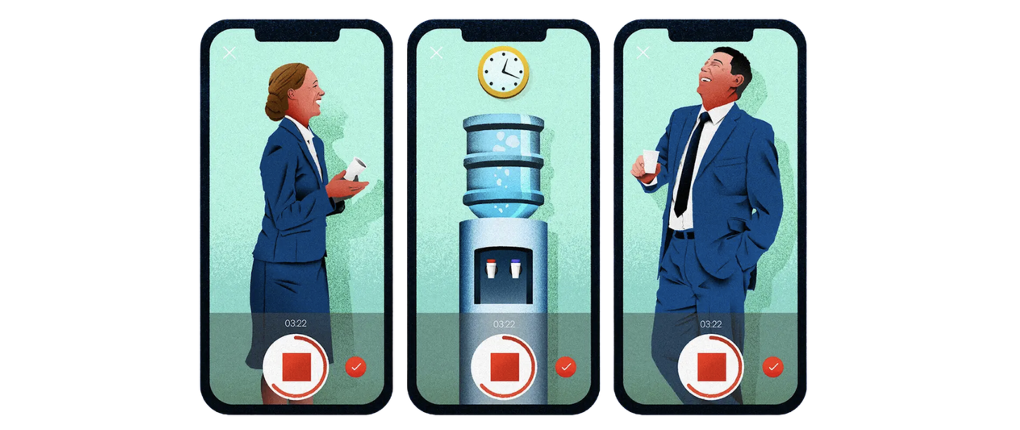
Illustration of three smartphones showing office workers video recording at a water cooler, representing workplace

Influencer Culture at Work: The Rise of the “Workfluencer” and Personal Branding on LinkedIn

Team IIBPAnveshan, Business Psychology, Employee Engagement, Employee Health, Issue 54, Organizational Culture, Volume 4

LinkedIn, initially designed for job hunting and professional networking, has significantly evolved. T oday, it is a hub for content creators aspiring to share expertise, cultivate loyal followings, and establish personal brands. It has become a place to be visible and showcase oneself professionally. The value of standing out in a competitive job market is undeniable—both for job seekers aiming …

Illustration of a worker leaning back with feet up on desk, holding coffee, laptop open but disengaged

The “Quiet Quitting” Phenomenon: Is Disengagement on the Rise?

Team IIBPAnveshan, Business Psychology, Employee Engagement, Employee wellbeing, Issue 54, Organizational Culture, Team Effectiveness, Volume 4

Quiet Quitting, a pervasive phenomenon, refers to completing the bare minimum requirements of one’s job and the task given and putting less effort, time, and enthusiasm than necessary. Here, the employees fulfill their responsibilities, stay in their positions, and receive compensation but are less willing to engage in citizenship behavior such as helping colleagues, volunteering for extra tasks, or contributing …

Men, Authority, Obedience: The Psychology of Power in Male Dominated Spaces

Team IIBPBusiness Psychology, Emotional Intelligence, Issue 53, Mental Health, Social Psychology, Volume 4

The dynamics of authority and obedience in male-dominated spaces are constantly shaped by individual status, ambition and competition and manifested through established hierarchies, power dynamics, and social norms and relationships. From an early age, men are often conditioned to respect hierarchies in schools, sports and boy-scout, by ingraining concept of discipline, strength and loyalty and its perceived necessity for collective …

Illustration of a male healthcare worker pushing an elderly man in a wheelchair

Men in Caring Professions: Breaking Barriers in Indian Healthcare and Education

Team IIBPBusiness Psychology, Emotional Intelligence, Employee Health, Issue 53, Mental Health, Social Psychology, Volume 4

“Beta, teaching is a woman’s job. Why don’t you pursue engineering instead?” This waswhat Rajesh Krishnan heard from his relatives when he announced his decision to become a primary school teacher. Today, after eight years of teaching, he’s not just educating third-graders – he’s challenging deep-rooted biases as he believes his examples are more inclusive and representative of the inclusive …

Illustration of office workers celebrating at a party with charts, drinks, and decorations while balancing work

Workplace Productivity During Festivals: Balancing Celebrations and End-of-Year Goals

Team IIBPAnveshan, Business Psychology, Employee Engagement, Employee wellbeing, Issue 52, Organizational Culture, Volume 4

As the vibrant Ganesh Chaturthi season approached, Meera, a sales executive at a mid-sized pharmaceutical company, was excited. The festival was a time for family, devotion, and celebration. She had taken a few days off to help with preparations and participate in local festivities. Her company was also hosting fun events— competitions, potlucks, and office decorations. Amid the back-to-back activities, …

Illustration of a worried person holding a long receipt with a piggy bank and dollar coin nearby, representing financial

Employee Stress Management During Festivals: Balancing Work and Personal Financial Demands

Team IIBPAnveshan, Business Psychology, Employee wellbeing, Issue 52, Organizational Culture, Social Psychology, Volume 4

With the onset of the festive season, joy and celebration are abundant. Paradoxically, this is also a time when stress and depression peak, especially in the workplace (ThoughtFull World, 2024). A survey conducted by Virgin Pulse, an employee health engagement firm, found that 70% of employees reported feeling more distressed during the festive season, and 60% felt distracted due to …

Counter-dependence and its manifestations

Vijai PandeyBusiness Psychology, Coaching, Team Effectiveness

This article explores the concept of counter-dependence as it manifests in T-Group experiences and other group settings. Often misunderstood in pop psychology, counter-dependence is a dysfunctional behavior where individuals reject help and emotional closeness, even when they need it. Through real-life examples from T-Group sessions, we delve into the indicators of counter-dependence, such as resistance to feedback, avoidance of vulnerability, and overcompensation in self-reliance. Learn how this behavior impacts group dynamics and discover healthier alternatives for fostering trust and openness.

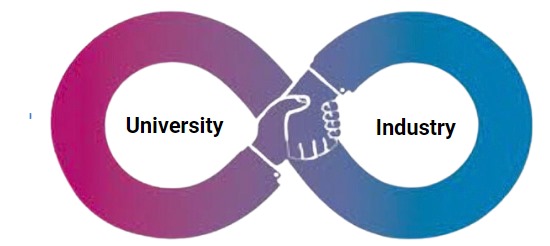
Bridging Academia and Industry: Mentors in the Evolution of I/O Psychology

Team IIBPAnveshan, Business Psychology, Coaching, Issue 51

“Every stage of your career requires different skills and insights. The right mentor at each phase will help you grow, adapt, and succeed in ways you never thought possible.” – Marissa Mayer“The science of I-O psychology helps us understand that the key to business success lies in understanding people, not just processes.” – Edwin A. Fleishman Is Industrial-Organizational (I/O) Psychology …

Balancing Act: Work-life balance strategies for the 21st century

Team IIBPAnveshan, Business Psychology, Employee Health, Employee wellbeing, Issue 50, Organizational Culture, Uncategorized, Volume 4

An organizational concept known as “work-life balance” enables workers to effectively divide their time and attention between their jobs and other significant facets of their lives. Organizational psychologists may recommend putting work-life balance initiatives into place if they discover that staff members are depressed or anxious. Enhancing the work-life balance of staff members enables them to generate more and better …