
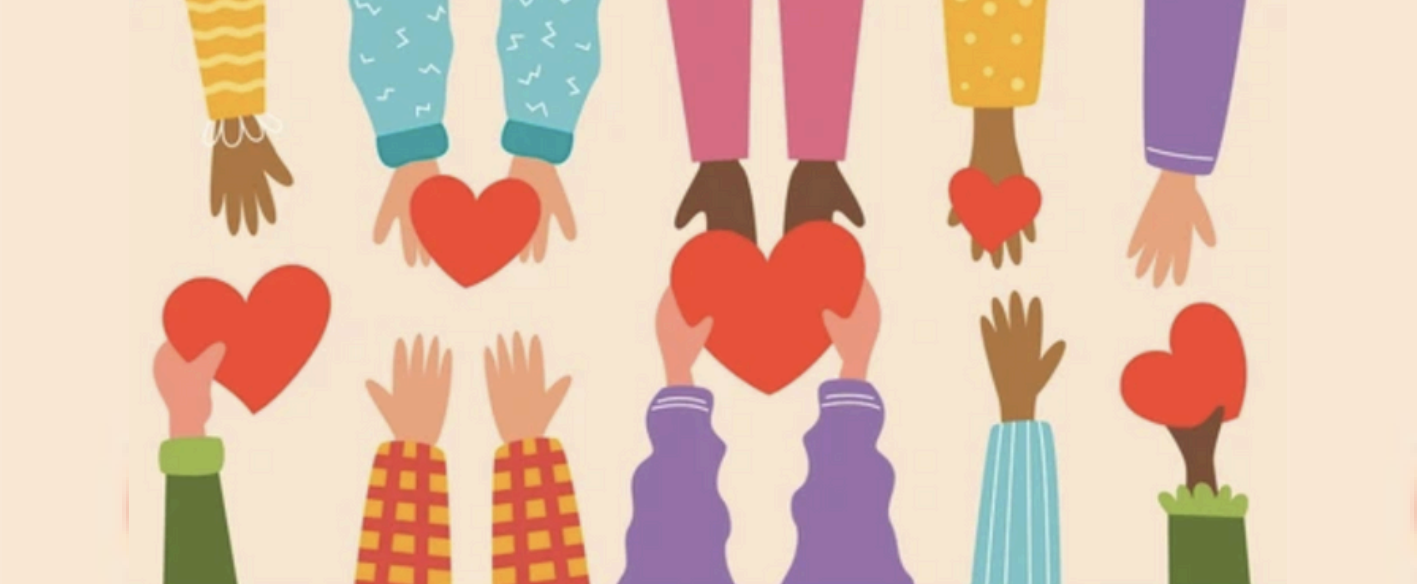
Have you ever noticed that gentle rush of warmth after you do something kind whether it’s helping a stranger, donating to a cause, or simply checking in on a friend? That pleasant feeling isn’t just emotional, it’s neurological. Science shows that generosity lights up our brains in the same way that joy, love, and even good food do. Helping others quite literally rewires us for happiness.
The Brain’s Secret Reward for Kindness
When we give, our brain’s reward system jumps into action. Functional MRI studies reveal that altruistic acts activate the mesolimbic pathway , the same pleasure network triggered by music, chocolate, or laughter. Dopamine, serotonin, and endorphins which are the brain’s “feel-good trio” flood our system, producing what psychologists call the helper’s high. This isn’t accidental. Evolution may have designed our brains this way to encourage cooperation. When kindness feels good, we’re more likely to repeat it, creating a positive feedback loop that benefits both individuals and communities.
The Chemistry of Connection
Another key player in this feel-good equation is oxytocin often called the “bonding hormone.” When you help someone, oxytocin levels rise, deepening feelings of trust, empathy, and connection. It’s the same hormone that strengthens relationships between parents and children, close friends, and romantic partners. Oxytocin doesn’t work alone, it interacts with dopamine to make generosity intrinsically rewarding. So, the next time you feel lighter after doing something thoughtful, remember: your brain just gave you a biochemical highfive.
When Empathy Lights Up the Mind
Our ability to care for others comes from a fascinating brain mechanism called mirror neurons. These cells fire not only when we act, but also when we watch someone else experiencing emotion or pain. It’s what makes us wince when we see someone get hurt or smile when someone laughs. This built-in empathy circuit allows us to “feel with” others, not just “for” them. Neuroscientists have found that regions like the anterior insula and anterior cingulate cortex , areas involved in emotional awareness, activate both when we suffer and when we see someone else suffer. In short, empathy is the brain’s nudge pushing us from understanding to action.
How Generosity Rewires the Brain
Kindness doesn’t just make us feel good in the moment, it can actually reshape the brain over time. Studies in neuroplasticity show that people who regularly engage in compassionate acts develop stronger activity in regions associated with joy and social connection, and lower activity in areas tied to stress and anxiety. Long-term volunteers and habitual givers also report better emotional balance and higher life satisfaction. Giving, it seems, trains the brain like exercise trains the body in building resilience, empathy, and contentment.
The Ripple Effect of Kind Acts
What’s truly remarkable is that helping others doesn’t deplete our energy, rather it restores it. Research shows that people who give their time or resources often experience reduced levels of cortisol (the stress hormone) and improved immune function. The effect can spread socially, too. Witnessing kindness triggers similar brain responses in observers, inspiring them to act generously as well. Psychologists call this “moral elevation” ‚the uplifting feeling that arises when we see goodness in others. One small act can quietly set off a chain reaction of positivity.
Why Your Brain Wants You to Be Kind
At the end of the day, giving isn’t just about charity or obligation, it’s about connection. Our brains evolved to find meaning in relationships, not isolation. Helping others satisfies that ancient wiring, strengthening our sense of belonging and purpose. Modern neuroscience simply confirms what humans have always known intuitively: when we lift others, we lift ourselves. Generosity, gratitude, and compassion aren’t just virtues, they’re brain-boosting habits that keep our minds and communities healthy.
In a Nutshell
Science tells us that giving activates the same brain networks that bring us joy, calm, and connection. It releases neurochemicals that improve mood, reduce stress, and reinforce empathy.It changes our brain’s structure and shapes our emotional well-being. So the next time you feel that quiet happiness after a kind act, know this – it’s not a coincidence. It’s your brain’s way of saying, “Well done, keep doing that.”
References
• Hu, J., Qi, S., Becker, B., Luo, L., Gao, S., Gong, Q., & Kendrick, K. M. (2021). Oxytocin selectively facilitates learning with social feedback and increases activity and functional connectivity in emotional memory and reward processing regions. Human Brain Mapping, 42(4),923-939. https://doi.org/10.1002/hbm.25271
• Tacoboni, M. (2009). Imitation, empathy, and mirror neurons. Annual Review of Psychology, 60,653-670. https://doi.org/10.1146/annurev.psych.60.110707.163604
• Moll, Jo, Krueger, F., Zahn, R., Pardini, M., de Oliveira-Souza, R., & Grafman, J. (2006). Human fronto-mesolimbic networks guide decisions about charitable donation. Proceedings of the National Academy of Sciences, 103(42), 15623-15628. https://doi.org/10.1073/pnas.0604475103
• Nowak, M. A., & Highfield, R. (2011). SuperCooperators: Altruism, evolution, and why we need each other to succeed. Free Press.
• Post, S. G. (2014). Prosocial behavior, happiness, and health: The role of evolution and altruism. International Journal of Behavioral Medicine, 21(6), 745-753. https://doi.org/10.1007/s12529-013-9350-0 • Poulin, M. J., Brown, S. Lo, Dillard, A. J., & Smith, D. M. (2013). Giving to others and the association between stress and mortality. American Journal of Public Health, 103(9),1649-1655. https://doi.org/10.2105/AJPH.2012.300876
• Singer, T., & Klimecki, O. M. (2014). Empathy and compassion. Current Biology, 24(18),R875-R878. https://doi.org/10.1016/j.cub.2014.06.054
• Weng, H. Y., Fox, A. S., Shackman, A. J., Stodola, D. E., Caldwell, J. Z. K., Olson, M. C., Rogers, G. M., & Davidson, R. J. (2013). Compassion training alters altruism and neural responses to suffering. Psychological Science, 24(7), 11711180.https://doi.org/10.1177/0956797612469537
• Lak, P. J. (2013). The moral molecule: The source of love and prosperity. Penguin Books.
About the Author