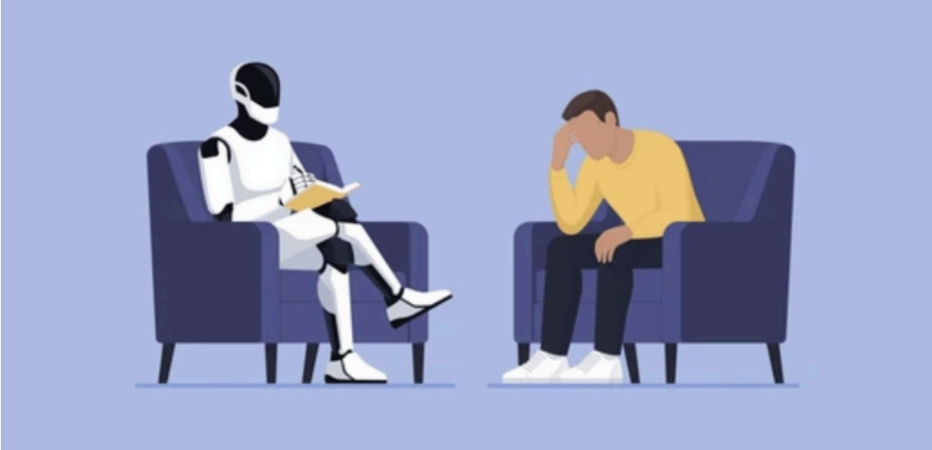
Emotions influence how employees communicate, cooperate and make decisions within organisations. Research shows that emotional expressions such as voice tone, language and facial behaviour shape collaboration because they signal respect, trust and inclusion (Barsade, 2002). When emotional signals are positive, members participate more and share ideas freely. When signals are negative or ignored, teams become quiet, information is withheld and conflict becomes more likely. Psychological safety is a key factor in this process, and teams perform better when people believe their contributions willnot lead to embarrassment or punishment (Edmondson & Lei, 2014). As many organisations move toward virtual and hybrid formats, emotional information is easier to miss, which has led to interest in whether artificial intelligence can assist in detecting emotional patterns.
Affective computing refers to the design of technologies that recognise emotional information from sources such as speech, text and facial movement (Picard, 1997). Studies in affect detection show that machine-learning systems can classify positive and negative emotional valence and can identify changes in sentiment over time, especially when combining text, audio and behavioural signals (Calvo & D’Mello, 2010). Machines do not understand emotions in a human sense, but they can detect statistical patterns associated with emotional states (Barrett, 2017). This creates the possibility that Al could support group dynamics by highlighting changes in communication that humans may overlook in digital environments.
There are growing examples of organisations using these tools. Microsoft Viva Insights combines anonymous survey responses and behavioural data to show patterns such as overload, silence in meetings or declining engagement (Microsoft, 2024). Managers use this information to adjust work schedules, reduce unnecessary meetings and improve participation. When teams see that their input results in changes, psychological safety increases, and cooperation becomes easier (Edmondson & Lei, 2014). In another publicly reported case, a technology consulting team used sentiment analysis during virtual meetings. When negative tone increased, facilitators paused the discussion and invited team members to express concerns. According to the report, participation became more balanced and conflicts reduced (Sharma, 2023). This outcome reflects findings in organisational research that emotional tension should be addressed early to prevent breakdowns in communication (Barsade, 2002).
AI can also help detect early signs of disengagement. Sentiment analysis of textbased conversations has been shown to predict future collaboration quality and task success (Kubatova & Kukacka, 2021). This is useful in large or geographically dispersed teams where emotional signals can be difficult to observe. When emotional patterns become visible, teams are able to make timely adjustments, such as redistributing tasks, redesigning meetings or offering support to overloaded members.
However, there are significant limitations. Emotional expression differs across cultures and contexts, and affective systems may misidentify sarcasm, politeness or mixed emotions (Barrett, 2017).Machines recognise patterns but do not interpret meaning.
A negative sentiment score could reflect disagreement about an idea, frustration with workload or personal stress, and only human members can decide which explanation makes sense.Emotional data also raises ethical concerns. A meta-analysis of electronic monitoring shows that surveillance increases stress and reduces cooperation in teams (Stanton, 2022). Scholars recommend transparency, informed consent and reporting at the group level rather than identifying individuals (Calvo, Peters, Johnson & Rogers, 2020). Without these safeguards, emotional AI can harm trust and make group dynamics worse rather than better.
There are also limits in how AI information is used. Research on human-AI teamwork finds that communication and trust decrease when teams rely too heavily on automated suggestions without explanation (McNeese, Freeman, Mallick & Demir, 2021). Emotional signals can guide reflection, but improvement still depends on human action. If a system detects reduced engagement but the team ignores the information, relationships will not improve. Effective outcomes require discussion, empathy and fair decision-making, which are human responsibilities.
Taken together, research suggests a balanced conclusion. Machines cannot understand emotion in the full sense because they do not feel or interpret experience.However, they can detect patterns related to emotional states, such as negative language, silence, shorter messages or reduced participation (Calvo & D’Mello, 2010). When used responsibly, AI systems can improve group dynamics by making emotional information visible and encouraging early intervention.
Improvements occur when emotional data leads to changes in communication, workload and team processes. The technology supports awareness, while humans provide judgement and meaning.
Therefore, Al can contribute to healthier workplace relationships, but its role is supportive rather than interpretive. Emotional AI works best when paired with transparency, ethical data practices and open communication. It does not replace human understanding, but it can help organisations recognise emotional patterns that are difficult to see. With responsible use, AI offers a practical tool for improving participation, fairness and psychological safety in corporate teams.
References
• Barrett, L. F. (2017). How emotions are made: The secret life of the brain. Houghton Mifflin Harcourt.
• Barsade, S. G. (2002). The ripple effect: Emotional contagion and its influence on group behavior. Administrative Science Quarterly, 47(4), 644-675. https://doi.org/10.2307/3094912
• Calvo, R. A., & D’Mello, S. (2010). Affect detection: An interdisciplinary review of models, methods and their applications. IEEE Transactions on Affective Computing, 1(1), 18-37. https://doi.org/10.1109/T-AFFC.2010.1
• Calvo, R. A., Peters, D., Johnson, Do, & Rogers, Y. (2020). Ethics of emotional Al in workplace settings. Nature Human Behaviour, 4(2), 106-112. https://doi.org/10.1038/s41562019-0795-0
• Edmondson, A. C., & Lei, Z. (2014). Psychological safety: The history, renaissance and future of an interpersonal construct. Annual Review of Organizational Psychology and Organizational Behavior, 1, 23-43. https://doi.org/10.1146/annurev-orgpsych-031413-091305
• Kubatova, J., & Kukacka, J. (2021). Automatic sentiment analysis of team communication as a predictor of collaboration outcomes. Group Decision and Negotiation, 30(1), 2949.https://doi.org/10.1007/s10726-020-09671-x
• McNeese, N. J., Freeman, G., Mallick, R., & Demir, M. (2021). Human-AI teaming in dynamic group work: A review of challenges and opportunities. ACM Transactions on Computer-Human Interaction, 28(6), 1-31. https://doi.org/10.1145/3453170
• Microsoft. (2024). Viva Glint and Insights Playbook. Microsoft Corporation.
• Picard, R. W. (1997). Affective computing. MIT Press.
• Sharma, R. (2023). Al supported sentiment tracking in agile product teams: A case reflection. LinkedIn Pulse.
• Stanton, J. M. (2022). Electronic performance monitoring and job performance: A metaanalysis of hedonic and behavioural outcomes. Journal of Business and Psychology, 37(2), 273-289. https://doi.org/10.1007/s10869-021-09744-x
About the Author