
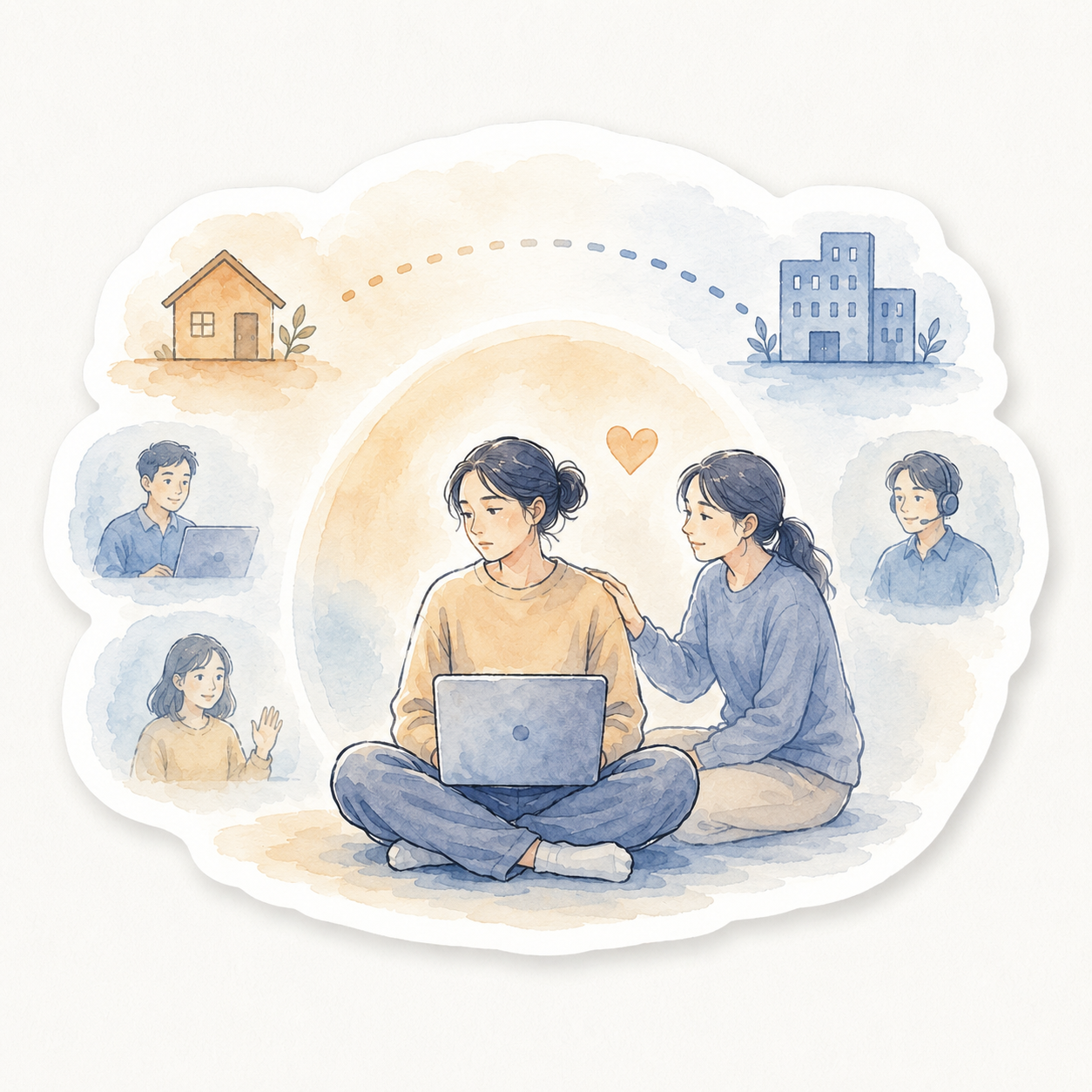
Change at work is not restricted to just mergers or new management. It can also happen through changes in the way work is organized such as through remote or hybrid work, or reduced contact with colleagues like it happened during Covid-19. Such changes can impact so much more than just work for employees, it can affect them socially and emotionally also.
D’Oliveira and Persico (2022) studied loneliness along with workplace isolation and wellbeing. They found that isolation from a person’s organization can negatively impact their wellbeing at work. Often, employees continue to complete their work and meet deadlines yet they can still feel distant from their company and colleagues. They also suggested that here, only increasing contact is not enough since making employees work together more or increasing task interdependence did not protect wellbeing.
However, supportive behaviours protected the wellbeing of employees. This suggests that connection at work is not about interaction, but rather about support that is meaningful. Hence, employees need to feel like they are recognized, valued and that there is help available especially when normal social contact and work routines are disrupted.
Ghaffaripour et al. (2026) looked at a similar problem but from a broader organizational perspective through looking at the psychosocial safety climate. It refers to whether an organization prioritizes the psychological health and safety of its employees’. They found that a strong psychosocial safety climate increased perceived organisational support and this then reduced stress, exhaustion and loneliness. In changing work conditions, it can help understanding because employees might feel disconnected or uncertain when workplace conditions change. So here, receiving organizational support would make employees feel cared for and included.
Both these studies suggest that loneliness at work may not just be an individual problem, it depends on the team environment, psychological factors and other factors. D’Oliveira and Persico (2022) showed that supportive behaviors between colleagues can protect wellbeing while Ghaffaripour et al. (2026) found that support comes from the overall organisational climate. Hence, change in wellbeing depends on everyday support from colleagues and a culture of psychological safety.
All in all, both studies challenge that loneliness can be solved by just getting people in contact with each other. Employees can also feel lonely when conversations are shallow, forced or if they lack any real support. This gets even more relevant when organisations work remote working as social connection becomes less natural and more intentional. So, during change it is important to actively provide support and create a psychological safe climate otherwise employees may continue working but their wellbeing may slowly deteriorate.
Food for thought: Is workplace wellbeing protected by being around others, or by feeling valued by them?
References
- D’Oliveira, T. C., & Persico, L. (2022). Workplace isolation, loneliness and wellbeing at work: The mediating role of task interdependence and supportive behaviours. Applied Ergonomics, 106, 103894. https://doi.org/10.1016/j.apergo.2022.103894
- Ghaffaripour, S., Dollard, M. F., & Mäkikangas, A. (2026). Role of Organizational Support and Loneliness in Psychosocial Safety Climate–Well-Being Relationship: Insights from the Latent Change Score and Cross-Lagged Panel Models in Two Longitudinal Studies. Journal of Business and Psychology. https://doi.org/10.1007/s10869-026-10111-5